Welcome To eLiviving forum

I hope The Information buried in this blog satisfies all your pressing questions... Enjoy your stay and don't forget to follow...

Thursday, 26 June 2014

How to strengthen your loving relationship

Everyone’s relationship is unique, and people come together for many different reasons. But there are some things that good relationships have in common. Knowing the basic principles ofhealthy relationships helps keep them meaningful, fulfilling and exciting in both happy times and sad:
What makes a healthy love relationship?
  • Staying involved with each other. Some relationships get stuck in peaceful coexistence, but without truly relating to each other and working together. While it may seem stable on the surface, lack of involvement and communication increases distance. When you need to talk about something important, the connection and understanding may no longer be there.
  • Getting through conflict. Some couples talk things out quietly, while others may raise their voices and passionately disagree. The key in a strong relationship, though, is not to be fearful of conflict. You need to be safe to express things that bother you without fear of retaliation, and be able toresolve conflict without humiliation, degradation or insisting on being right.
  • Keeping outside relationships and interests alive. No one person can meet all of our needs, and expecting too much from someone can put a lot of unhealthy pressure on a relationship. Havingfriends and outside interests not only strengthens your social network, but brings new insights and stimulation to the relationship, too.
  • Communicating. Honest, direct communication is a key part of any relationship. When both people feel comfortable expressing their needs, fears, and desires, trust and bonds are strengthened. Nonverbal cues—body language like eye contact, leaning forward or away, or touching someone’s arm—are critical to communication.

Relationship advice tip 1: Keep physical intimacy alive

Touch is a fundamental part of human existence. Studies on infants have shown the importance of regular, loving touch and holding on brain development. These benefits do not end in childhood. Life without physical contact with others is a lonely life indeed.
Keep physical intimacy aliveStudies have shown that affectionate touch actually boosts the body’s levels of oxytocin, a hormone that influences bonding and attachment. In a committed relationship between two adult partners, physical intercourse is often a cornerstone of the relationship. However, intercourse should not be the only method of physical intimacy in a relationship. Regular, affectionate touch—holding hands, hugging, or kissing—is equally important.
Be sensitive to what your partner likes. While touch is a key part of a healthy relationship, it’s important to take some time to find out what your partner really likes. Unwanted touching or inappropriate overtures can make the other person tense up and retreat—exactly what you don’t want.

Relationship advice tip 2: Spend quality time together

You probably have fond memories of when you were first dating your loved one. Everything may have seemed new and exciting, and you may have spent hours just chatting together or coming up with new, exciting things to try. However, as time goes by, children, demanding jobs, long commutes, different hobbies and other obligations can make it hard to find time together. It’s critical for your relationship, though, to make time for yourselves. If you don’t have quality time, communication and understanding start to erode
Couples are often more fun and playful in the early stages of a relationship. However, this playful attitude can sometimes be forgotten as life challenges or old resentments start getting in the way. Keeping a sense of humor can actually help you get through tough times, reduce stress, and work through issues more easily.

Focus on having fun together

  • Think about playful ways to surprise your partner, like bringing flowers or a favorite movie home unexpectedly.
  • Learn from the “play experts” together. Playing with pets or small children can really help you reconnect with your playful side. If it’s something you do together, you also learn more about your partner and how he or she likes to have fun.
  • Make a habit of laughing together whenever you can. Most situations are not as bleak as they appear to be when you approach them with humor.

Learning how to play again

A little humor and playful interaction can go a long way in relieving tense situations and helping you see the brighter side. If you’re feeling a little rusty, learn more about how playful communication can improve your relationship, and for fun ways to practice this skill.

Relationship advice tip 3: Never stop communicating

Good communication is a fundamental part of a healthy relationship. When people stop communicating well, they stop relating well, and times of change or stress can really bring out disconnect. As long as you are communicating, you can work through whatever problem you’re facing.

Learn your partner’s emotional cues

Never stop communicatingEach of us is a little different in how we best receive information. Some people might respond better to sight, sound, or touch. Your partner’s responses may be different from yours. Take some time to learn your partner’s cues, and be sure to communicate your own as well. For example, one person might find a brief massage after a stressful day a loving mode of communication—while another might just want to talk over a hot cup of tea.
So much of our communication is transmitted by what we don’t say. Nonverbal cues—such as eye contact, leaning forward or away, or touching someone’s arm—communicate much more than words. For a relationship to work well, each person has to be receptive to sending and receiving nonverbal cues. Learning to understand this “body language” can help you better understand what your partner is trying to say. Think about what you are transmitting as well, and if what you say matches what you feel. If you say “I’m fine,” but you clench your teeth and look away, then your body is clearly signaling you are not.

Question your assumptions

If you’ve known each other for a while, you may assume that your partner has a pretty good idea of what you are thinking and what you need. However, your partner is not a mind reader. While your partner may have some idea, it is much healthier to directly express your needs to avoid any confusion. Your partner may sense something, but it might not be what you need. What’s more, people change, and what you needed and wanted five years ago, for example, may be very different now. Getting in the habit of expressing your needs helps you weather difficult times, which otherwise may lead to increasing resentment, misunderstanding, and anger.

Use your senses to keep stress in check

If you’re not calm and focused, you won’t be able to communicate effectively. The best way to reduce stress quickly and reliably is through the senses. But each person responds differently to sensory input, so you need to find things that are soothing to you.

Relationship advice tip 4: Healthy relationships are built on give and take

If you expect to get what you want 100% of a time in a relationship, you are setting yourself up for disappointment. Healthy relationships are built on compromise, and it takes work on each person’s part to make sure that there is a reasonable exchange.

Recognize what’s important to your partner

Knowing what is truly important to your partner can go a long way towards building goodwill and an atmosphere of compromise. On the flip side, it’s also important for your partner to recognize your wants and for you to state them clearly. Constantly compromising your needs for others' will build resentment and anger.

Don’t make “winning” your goal

If you approach your partner with the attitude that things have to be your way or else, it will be difficult to reach a compromise. Sometimes this attitude comes from not having your needs met while you were younger, or it could be from years of accumulated resentment building up in your current relationship. It’s all right to have strong convictions about something, but your partner deserves to be heard as well. You are more likely to get your needs met if you respect what your partner needs, and compromise when you can.

Learn how to respectfully resolve conflict

Conflict is inevitable in any relationship, but to keep a relationship strong, both people need to feel they’ve been heard. The goal is not to win but to resolve the conflict with respect and love.
  • Make sure you are fighting fair.
  • Don’t attack someone directly; use “I” statements to communicate how you feel.
  • Don’t drag old arguments into the mix.
  • Keep the focus on the issue at hand, and respect the other person.

Relationship advice tip 5: Expect ups and downs

It’s also important to recognize that there are ups and downs in every relationship. You won’t always be on the same page. Sometimes one partner may be struggling with an issue that stresses them, such as the death of a close family member. Other events, like job loss or severe health problems, can affect both partners and make it difficult to relate to each other. You might have different ideas of managing finances or raising children. Different people cope with stress differently, and misunderstanding can rapidly turn to frustration and anger.

Relationship advice for getting through life’s ups and downs

  • Don’t take out your problems on your partner. Life stresses can make us short tempered. If you are coping with a lot of stress, it might seem easier to snap at your partner. Fighting like this might initially feel like a release, but it slowly poisons your relationship. Find other ways to vent your anger and frustration.
  • Some problems are bigger than both of you. Trying to force a solution can cause even more problems. Every person works through problems and issues in his or her own way. Remember that you’re a team. Continuing to move forward together can get you through the rough spots.
  • Be open to change. Change is inevitable in life, and it will happen whether you go with it or fight it. Flexibility is essential to adapt to the change that is always taking place in any relationship, and it allows you to grow together through both the good times and the bad.
  • Don’t ignore problems. Whatever problems arise in a romantic relationship, it’s important to face them together as a couple. If an aspect of the relationship stops working, don’t simply ignore it, but instead address it with your partner. Things change, so respond to them together as they do.

Romantic relationships require ongoing attention

Many couples focus on their relationship only when there are specific, unavoidable problems to overcome. Once the problems have been resolved they often switch their attention back to their careers, kids, or other interests. However, romantic relationships require ongoing attention and commitment for love to flourish. As long as the health of a romantic relationship remains important to you, it is going to require your attention and effort.

If you need more relationship help and advice

Sometimes problems in a relationship may seem too complex or overwhelming for a couple to handle on their own. In that case, it’s important to reach out together for help. There are a number of options available, including:
  • Couples counseling. It’s a big investment, and time, energy, focus and commitment are needed from both people to make a difference, but you might consider couples or marriage counseling to resolve your differences. Both parties need to be willing and able to honestly communicate what he or she needs, face the issues that arise in counseling, and then make the necessary changes. It’s important also that both people feel comfortable with the counselor.
  • Spiritual advice. Some couples benefit from spiritual advice from a religious figure such as a pastor or rabbi. This tends to work best if both persons have similar convictions of faith and have a good relationship with the spiritual advisor.
  • Emotional Intelligence building. Try using Helpguide's Emotional Intelligence Toolkit, a free utility for building emotional health and emotional intelligence. This in-depth course provides articles, videos, and audio meditations designed to help you put the skills of emotional intelligence and communication into practice.
  • Individual therapy. Sometimes one person may need specialized help. For example, someone who is grieving the loss of a loved one may need counseling to help him or her process the grief. If your loved one needs help, don’t feel like you are a failure for not providing him or her everything he or she needs. No one can fulfill everyone’s needs, and getting the right help can make a tremendous difference in your relationship.

Thursday, 12 September 2013

Defining Love, Fundamental Wedding Commitments Of Marriage

In relationships, defining love comes in the form of a fundamental commitment decision to get married and to remain in that marriage, (tell death do us part). There are many ways that society goes about defining love, much of which is sexually orientated. However a true love definition can be found in 1 Corinthians 13:4-7, which says; Love is patient and kind. Love knows neither envy nor jealousy. Love is not forward and self-assertive, nor boastful and conceited. She does not behave unbecomingly, nor seek to aggrandize herself, nor blaze out in passionate anger, nor brood over wrongs. She finds no pleasure in injustice done to others, but joyfully sides with the truth. She knows how to be silent. She is full of trust, full of hope, full of patient endurance.
Did you notice that the love definition above had no connotations about romance or sex? That is not to say that they would not play a part within a marriage, but they are not on a marriages foundational premise. Another way of defining love is to say that love is otherness, love intently looks to meet the needs of others, not of itself. So in deciding to commit yourself through the love of marriage, means to make a fundamental choice to love your spouse. You see it’s not about getting married because you are lonely, it’s not about being horny, it’s not about financial economics, it’s not about having a house, a car, or a picket fence. It’s all about having someone to cherish, to hold dear, and to love, no matter what! That is why so many marriages end up in divorce, married couples venture off on their wedding day under inaccurate pretexts.
A couple first needs to define what a commitment to love means individually, to themselves, before rushing down the wedding isle. (After two failed marriages I finally understood this. Make sure your choices are in alignment and that they are not set on foundations of quicksand!). When you decide you want to get married, you need to be making a fundamental decision to love within you. Sure you say you want to be with them for the rest of your life, but you have got to be resolved inside of yourself with the primary objective of loving your spouse through all the hills and valleys of life. You must decide that you are going to love the good, the bad, and the ugly parts of them. Since we are imperfect beings, you are going to find some imperfections, some things you do not enjoy about them. So you will have to love them with all their blemishes, and they are guaranteed to have a few! Don’t worry though, you won’t be alone in this, your spouse will likewise have to learn to love you with your flaws as well. Through love you will both learn to overlook these pieces of each other, you will have many opportunities to love, through extensions of grace. Once a couple learns to love the smaller portions of imperfections in each other, loving the other 90 percent will be even more enjoyable. This is a process that you could call the maturing of your love.
The defined marriage commitment may not be what you previously thought, and this is why it is highly suggested that you seek and obtain some pre-marital counseling before you make promissory vows to each other in a wedding. You need to have some good insights into the components of a healthy marriage. Obtaining wisdom will help you to make the right choices now, and to be the best lover you can be. In your marriage you will actually be defining love on a personal level with your spouse, in other words, together you will be creating your own love experience through companionship. You should want your wedding day to be remembered joyfully, 10, 20, or 50 years from now.
You need to have an in-depth understanding that to love your partner in marriage is a lifelong choice. It is a personal decision that should be understood in the depths of your soul. When the wedding day comes you will be defining your love for each other by committing to one another in marriage. You will have already made a promise to yourself to love your future spouse, but now you will be making 2 more promises! As you are joined and say your vows, you will be making a promise to your soon to be spouse and to God! Once the wedding is completed you have made 3 promises to love; you will have promised yourself that you would love your spouse, you will have promised your spouse, and you have promised God. If for any reason you think that you may forget about any of the three defining love commitments, you can always look at the ring around your finger to refresh your memory.
Your relational definition of love will be what you both create together by the actions of love in your marriage. As in the love definition above, love requires patience, love is unselfish, love overlooks offenses, love forgives, love is honest, love is faithful, love hopes, and love endures. Defining love in a relationship requires effort, respect, encouragement, giving, sharing, sacrificing, compromise, compassion, tenderness, understanding, humility, grace, mercy, empathy, thoughtfulness, appreciation, optimism, and cooperation, (just to name a few). Defining love is far more than a feeling, far more than sleeping in the same bed, it’s continuous actions in daily practice.


Can you be friends with the opposite sex?


HE SAID: Ladies, welcome to the biggest relationship cliché in the history of men and women. Billy Crystal and Meg Ryan made this question famous twenty years ago in When Harry Met Sally, psychologists have studied and debated the merits of cross-gender relationships to death, and who hasn’t heard a friend say “you can’t be friends with a member of the opposite sex?” Despite what you may have learned growing up or what your girlfriends say at happy hour, men and women can absolutely be anywhere from good to great to best friends. It doesn't happen all the time and it's not always easy, but it is possible.

The single biggest reason that deep friendships between men and women fail is sexual tension. Women I spoke to consistently said that it is “difficult to impossible” to have fulfilling friendships with men because as the friendship develops, men will inevitably want to elevate the relationship to a romantic level. Similarly but in much simpler terms, men I spoke to said that it is difficult to be friends with women “when you want to sleep with them”. Apparently, the tension between men and women can be so thick and muddies the waters of friendship so much that both genders are resigned to compartmentalize each other as a form of self-preservation.

From personal experience, I can say that I have been attracted to a fair share of my female friends. I have flirted with most, hit on a few, been hit on by others, turned down by some, and slept with some more. In almost every case, we were able to either maintain or improve our friendship because we confronted the sexual tension that existed, and mutually agreed how to deal with it. Sexual tension is certainly real, impossible to ignore, and can be difficult to negotiate. But like the weather, you can either let it dictate what you want to do, or you can deal with it. If you cannot manage your sexual tension or the sexual tension thrown your way, then be prepared to experience challenges in your day-to-day relationships throughout your life. Friendships between men and women do not fail because of sexual tension; they fail because of a lack of honestly about it—because it is brushed under the carpet, instead of being confronted. They fail, ultimately, because sometimes, we would rather lose a friend than go out on a limb. The funny thing we tend to forget about going out on a limb is that, after all, it's where the fruit is.


SHE SAID: I've had no trouble at all being friends with the opposite sex—once I've crossed that boundary and laid one on them, that is.

I'll admit it, I have poor impulse control—I've locked lips with most of my male friends, either before or after we became friends. For the men I've hooked up with at some point after establishing a platonic friendship, it's generally gone back to its pre-hookup state, our curiosities satisfied and our friendship unharmed.

I whole-heartedly believe that you can be close friends with the opposite sex. I also believe that almost all of these close friendships—friendships that venture outside of the group hangout setting—start with or eventually confront some sexual or romantic attraction, sometimes mutual and sometimes one-sided. Now, this doesn't mean you necessarily have to do something about it. Me? I need to confront the elephant in the room first and kiss them.

We're all busy people. We have enough friends. Fostering a new friendship takes time and effort...and let's admit it, sometimes we're a little more eager to do so if we're also picturing our new friend naked. Sometimes it grows and interferes with an actual friendship blossoming, but often, that attraction fades or is not all that strong in the first place, and the friends in question are able to carry on in a platonic fashion.

Bottom line: you can be just friends with the opposite sex, but chances are, one of you has entertained the thought of taking things a step further—but that doesn't mean you're not real friends. And if you're reading this and shaking your head in disagreement, thinking of that friend who's "just like a brother" to you, just know that you're probably on the receiving end of some very friendly thoughts.

Saturday, 28 January 2012

What do you say to make your girlfriend feel better after a bad day?

Sometimes you don't really have to say anything to a girl. Just some how let her know that you are there for her no matter what happens. Girls take their problems and turn it in everyway so it seems like it's the end of the world. If you give them a base (like a boyfriend or a best friend or a friend) they will continue trying to do good. Also speak words of encouragment. Don't go up to her and ask her if she's okay unless you know for sure she is done crying. I'm a girl and when anyone asks that when I just finished crying, I burst into tears again. Same with a lot of other girls
If the girl starts crying, don't run away screaming or stand there and say nothing. Don't even hug her lamely and say nothing. If you don't know what to say, just hug her (in a way that shows you aren't scared that she's crying) and tell her everything will be okay, or nothing at all if your hug has the words.
Sometimes you don't really have to say anything to a girl. Just some how let her know that you are there for her no matter what happens. Girls take their problems and turn it in everyway so it seems like it's the end of the world. If you give them a base (like a boyfriend or a best friend or a friend) they will continue trying to do good. Also speak words of encouragment. Don't go up to her and ask her if she's okay unless you know for sure she is done crying. As a girl when anyone asks that when she(girl) just finished crying, she burst into tears again. Same with a lot of other girls
If the girl starts crying, don't run away screaming or stand there and say nothing. Don't even hug her lamely and say nothing. If you don't know what to say, just hug her (in a way that shows you aren't scared that she's crying) and tell her everything will be okay, or nothing at all if your hug has the words.

Sunday, 20 November 2011

Outside Pressures on the Relationship

Differences in Background. Even partners coming from very similar cultural, religious, or economic backgrounds can benefit from discussing their expectations of how a good boyfriend, girlfriend, or spouse behaves. What seems obvious or normal to you may surprise your partner, and vice versa. If you are from different backgrounds, be aware that you may need to spend more time and energy to build your relationship. Take the time to learn about your partner's culture or religion, being careful to check out what parts of such information actually fit for your partner.

Time Together and Apart. How much time you spend together and apart is a common relationship concern. If you interpret your partner's time apart from you as, "he or she doesn't care for me as much as I care for him or her," you may be headed for trouble by jumping to conclusions. Check out with your partner what time alone means to him or her, and share your feelings about what you need from the relationship in terms of time together. Demanding what you want, regardless of your partner's needs, usually ends up driving your partner away, so work on reaching a compromise.

Your Partner's Family. For many students, families remain an important source of emotional, if not financial, support during their years at the university. Some people find dealing with their partner's family difficult or frustrating. It can help to take a step back and think about parental good intentions. Families may offer well-intentioned advice about your relationship or your partner. It's important that the two of you discuss and agree on how you want to respond to differing family values and support one another in the face of what can be very intense "suggestions" from family.

Friends. There are some people who seem to believe that "I have to give up all my friends unless my partner likes them as much as I do." Giving up friends is not healthy for you or the relationship, except in circumstances where your friends pressure you to participate in activities that are damaging to yourself and the relationship. At the same time, keep in mind that your partner may not enjoy your friends as much as you do. Negotiate which friends you and your partner spend time with together. You might ask: "Which of my friends do you enjoy seeing and which ones would you rather I see alone or at other times when I'm not with you?"

What to Do When Conflict Arises

Disagreements in a relationship are not only normal but, if constructively resolved, actually strengthen the relationship. It is inevitable that there will be times of sadness, tension, or outright anger between you and your partner. The source of these problems may lie in unrealistic/unreasonable demands, unexplored expectations, or unresolved issues/behaviors in one partner or in the relationship. Resolving conflicts requires honesty, a willingness to consider your partner's perspective even if you don't fully understand it, and lots of communication.
Healthy communication is critical, especially when there are important decisions regarding sex, career, marriage, and family to be made. The following are some guidelines for successful communication and conflict resolution.
  • Understand Each Others' Family Patterns. Find out how conflicts were managed (or not managed) in your partner's family, and talk about how conflict was approached (or avoided) in your own family. It is not unusual for couples to discover that their families had different ways of expressing anger and resolving differences. If your family wasn't good at communicating or resolving conflict constructively, give yourself permission to try out some new ways of handling conflict.
  • Timing Counts. Contrary to previous notions, the best time to resolve a conflict may not be immediately. It is not unusual for one or both partners to need some time to cool off. This "time-out' period can help you avoid saying or doing hurtful things in the heat of the moment, and can help partners more clearly identify what changes are most important. Remember - if you are angry with your partner but don't know what you want yet, it will be nearly impossible for your partner to figure it out!
  • Establish an Atmosphere of Emotional Support. Emotional support involves accepting your partner's differences and not insisting that he or she meet your needs only in the precise way that you want them met. Find out how your partner shows his or her love for you, and don't set absolute criteria that require your partner to always behave differently before you're satisfied.
  • Agree to Disagree and Move On. Most couples will encounter some issues upon which they will never completely agree. Rather than continuing a cycle of repeated fights, agree to disagree and negotiate a compromise or find a way to work around the issue.
  • Distinguish between things you want versus things you need from your partner. For example, for safety reasons, you might need your partner to remember to pick you up on time after dark. But calling you several times a day may really only be a "want."
  • Clarify Your Messages. A clear message involves a respectful but direct expression of your wants and needs. Take some time to identify what you really want before talking to your partner. Work on being able to describe your request in clear, observable terms. For example, you might say, "I would like you to hold my hand more often" rather than the vague, "I wish you were more affectionate."
  • Discuss One Thing at a Time. It can be tempting to list your concerns or grievances, but doing so will likely prolong an argument. Do your best to keep the focus on resolving one concern at a time.
  • Really Listen. Being a good listener requires the following: (a) don't interrupt, (b) focus on what your partner is saying rather than on formulating your own response, and (c) check out what you heard your partner say. You might start this process with: "I think you are saying..." Or "what I understood you to say was..." This step alone can prevent misunderstandings that might otherwise develop into a fight.
  • Restrain Yourself. Research has found that couples who "edit" themselves and do not say all the angry things they may be thinking are typically the happiest.
  • Adopt a "Win-Win" Position. A "win-win" stance means that your goal is for the relationship, rather than for either partner, to "win" in a conflict situation. Ask yourself: "Is what I am about to say (or do) going to increase or decrease the odds that we'll work this problem out?"

Eight Basic Steps to Maintaining a Good Relationship

  1. Be aware of what you and your partner want for yourselves and what you want from the relationship.
  2. Let one another know what your needs are.
  3. Realize that your partner will not be able to meet all your needs. Some of these needs will have to be met outside of the relationship.
  4. Be willing to negotiate and compromise on the things you want from one another.
  5. Do not demand that a partner change to meet all your expectations. Work to accept the differences between your ideal mate and the real person you are dating.
  6. Try to see things from the other's point of view. This doesn't mean that you must agree with one another all the time, but rather that both of you can understand and respect each other's differences, points of view, and separate needs.
  7. Where critical differences do exist in your expectations, needs, or opinions, try to work honestly and sincerely to negotiate. Seek professional help early rather than waiting until the situation becomes critical.
  8. Do your best to treat your partner in a way that says, "I love you and trust you, and I want to work this out."

The Poor African Diet

 Balanced diet                                     


The poor diet that most African children are exposed to is one of the main causes of African poverty and underdevelopment. It could perhaps explain why it was easy for Europeans to colonise Africans and why Africa is still being exploited both by foreigners and by its own leaders. The brain is the intelligent part of the body. The highest function of life- thinking- takes place in the brain. Why are Kenyans and by extension Africans corrupt? Poverty. Poverty stems from lack of a balanced diet and as a result, poor or bad brain development. To conceive and execute good strategies, one requires good working brains. Good brains in turn need good food.
Consider the most recommended diet below:
Carbohydrates 50-60%
Protein 10-20%
Fats 30-35%
Fibres 25-35grammes/daily
Vitamins
Carbohydrates are a source of energy. Proteins ensure body growth and repair (remember brain growth and worn out cells also need replacements). Fats provide energy and fat soluble vitamins. Vitamins in small quantities keep you healthy. Mineral salts ensure healthy teeth, bones and muscles while Fibres help your intestines to function correctly
Most African children and adults do consume 90% of carbohydrates in their daily diet and about 10% of the rest. The most important source of protein to an African’s brain comes from the carbohydrates metabolism already in the body. This metabolism tries hard to change the too much consumed carbohydrates to protein. A growing human being and developing brains need a lot of protein. Proteins are very important for the repair of worn out or dead cells. This is seen even in hospitals after operations; a poor diet causes wound to heal slowly and poorly.  Immunity, the way a body fights germs or diseases is also weak on individuals having poor diet. No brain will function well if you do not have enough food or good proteins.
Africans always blame the whites for malpractices that exist on the continent- while most of them are a result of our poor thinking. Consider the Anglo-leasing or Goldenberg scandals in Kenya. Europeans as well as respective African leaders were involved. But who is suffering? We see a very big difference on brain manipulations. Whereas Kenyan leaders were manipulating the system in Kenya and the tax-payers, the Europeans or Americans connected in these scandals were manipulating both our leaders and the common Kenyan man and woman plus their children.
You can extend that to the skewed global economic order that has made Africans producers of raw materials but left the processing of finished products to developed nations. We can’t harness our mineral resources; exploit solar energy; feed ourselves or even believe in ourselves unless a white man is involved! Isn’t that a show of malfunctioning or underdeveloped brains?
The past generation and present adults in Africa are already a let down to the continent. Just look at  Gaddafi; how can a president call for a jihad war against a foreign country as Gaddafi is doing now to Switzerland- just because  his son messed in Switzerland and was subjected to the Swiss law?  Do you think he has any live  brainy cells left in his head? What development will such a brain will bring to Africa? What development will brains that collude with foreigners to plunder Africa’s resources bring to the continent?
The poor diet theory explains a lot about the less achievement Africans have accomplished. The gene theory that laziness or brainless is more on blacks than in other races does not hold water anymore today.
We need to give our children better diets. We will see the difference. We need good diets- this will ensure good brains hence good mentors and good programmes. Most of Africans still eat a diet of 90% carbohydrates and 10% of very useless overcooked vegetables. This diet contains little or no nutrients required by the human brain to develop fully in order to handle due process. Our carbohydrate dependent society combined with leaders who are a product of carbohydrates is a recipe for disaster.  Just visit any boarding school in Africa and consider its diet, then compare it with our European counterparts. 
If the brain is already saturated with a lot of carbohydrates, do you expect to get any inventors?  You will end up breeding more corrupt bookworms and 'proffessionals' who can't solve any problem in the society.

With a good diet, Africans can achieve wonders: do not forget that our continent is one of the richest in the world- but it lags behind to due underdeveloped brains

Tuesday, 18 October 2011

Could you have a heart attack -- and not know it?

The lights dim in your favorite movie theater. You have your popcorn, Goobers and the largest soda you've ever seen. You're ready to watch the hero battle corruption for the good of all mankind -- to risk it all and lose his one true love in the process. He overcomes the odds and defeats the unscrupulous enemy. Alone and exhausted, his true love returns to reclaim the man that she cannot live without. Suddenly, our hero clutches his chest, doubles over and has trouble breathing. He drops to his knees and lays in his lover's arms. Before he goes, he manages a final farewell -- "I did it all for you." Then his tired, broken heart gives out once and for all. The curtain falls -- not a dry eye in the house.
If only all heart attacks were like they are in the movies. Unfortunately, that's not how they typically go down. A heart attack isn't very complicated. Your heart, like all muscles, needs blood to function properly. Blood is carried throughout the body through blood vessels and larger arteries. When the coronary arteries that supply blood to your heart get blocked, you're likely to have a heart attack. These arteries become blocked because of a buildup of something called plaque. Plaque may build if:
These factors put you at risk for plaque buildup, called atherosclerosis, and eventually a heart attack. Once that plaque builds up, it can rupture and completely block the artery, cutting off the blood supply to your heart.
Some of the common symptoms of a heart attack are:
  • sweating
  • shortness of breath
  • chest pressure
  • chest pain
  • prolonged squeezing in your chest area
  • pain shooting through arms, shoulders, back or jaw
  • nausea and vomiting
Women may also experience additional symptoms when they have heart attacks, and no one is quite sure why. The symptoms include clammy skin, dizziness, a burning sensation in the chest and unexplained fatigued. About 1.2 million Americans have heart attacks each year, and it's the leading killer of both men and women. About a third of these victims die before they ever get to the hospital. This is because you can actually have a heart attack and never realize it. It's called a "silent" heart attack, and it happens more often than you might think.

Tips on How to Have a Healthy Heart, How to Prevent Heart Disease.

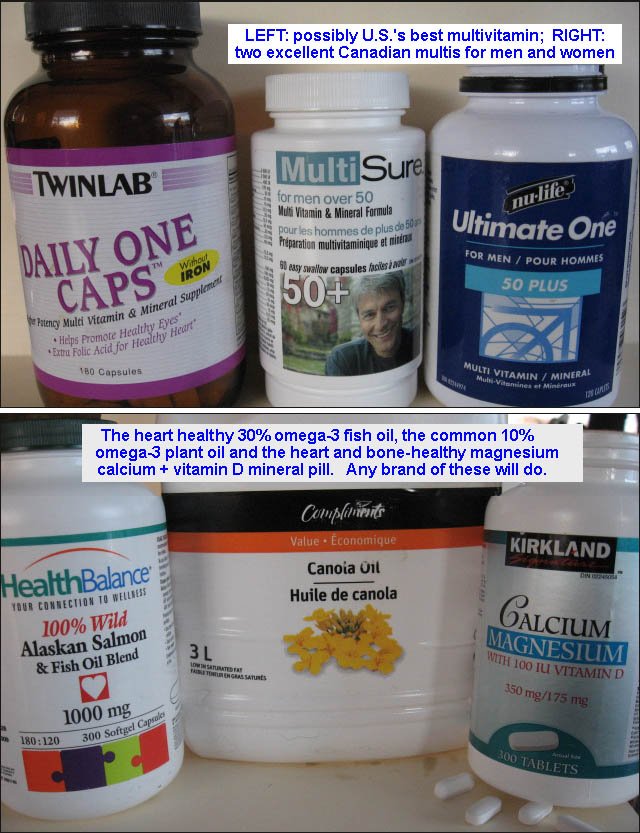
If an apple a day keeps the doctor away, what would it take to avoid a heart surgeon?  How about a multivitamin / mineral pill and some omega-3 oil (canola-rapeseed, flax, fish)?  Add a diet low in processed food and a good 'lifestyle' (don't smoke, control waist size, manage stress well, some exercise) and you will improve general health and help prevent heart disease.  I know, it is normal to believe you're eating a good diet but there is mathematical certainty that even the best diet does not get you the vitamin levels that our bodies and genome developed on.  Supplementation fixes this and is safe, cheap and, best of all: easy. This site looks at the food, supplement and prevention side of disease.  I study nutrition in medicine as an independent researcher but it is not my job.  This site doesn't generate money or sell anything.  Below are highlights about the nutrients that prevent damage to your artery and bone structure and sometimes even cure it, and about those that can help you survive already existing artery damage.

In food processing, as when making flour or noodles, we lose 60-90% of most heart healthy vitamins.  We degrade proteins by frying and high heat and our factories hydrogenate oil which first zaps all omega-3 (really vitamin F-3) by trans-forming it into toxic trans fat.    Science shows that a heart healthy diet is one with relatively unprocessed foods with veggies and some fruits, and rice or grains that retain some of their original kernel-structure to slow digestion.  Such 'whole' foods became scarce in Western diets.  If you can't recognize part of the original food, the item is processed or refined.  Some eggs, liver or fish are probably also vital for most of us.

Why a add multi-vitamin pill to your diet?  Well, most fast single nutrient diseases like scurvy, beriberi and goiter were wiped out by food fortification, our 'weapon of mass nutrition'.  However, processed foods low in many nutrients such as vitamins B6, B12, folic acid and others, cause 'Long-Latency Deficiency Diseases', such as heart disease, cancer, bone loss and Alzheimer's.  Think of these as nutrient deficiency diseases with long incubation periods and the science suddenly makes sense!  Start with cholesterol and the science will never makes sense (can your doctor explain the 6th figure from the bottom?).

Wednesday, 12 October 2011

Long Distance Relationship Arrangements

OK, so you know that many long distance couples find this arrangement to be the best of both worlds. You can live life without constant attention to a partner's needs, but have a person with whom you connect for romance and fun.
But what happens if something comes up in your normal life that is a real crisis? How does your long distance boyfriend or girlfriend fit into this situation? Do you not tell them about it? This may be the choice for some who don't want to bring “real life” into the bubble of that long distance love.
Or do you call them for support? Do you reach out as most folks would, for the comforting voice of your intimate partner?
There is no correct answer here. But it can be a turning point in telling you both about where your relationship is and where it is going.
How each of you handle this situation will tell you a lot. How do they handle your crisis. Or, conversely, how do you feel about them bringing their crisis to you? If you share a crisis with them, are they supportive or avoidant? If they call you, are you empathic or resentful that they're dumping this on you? A positive response can range from their staying more in touch than normal by calling or emailing regularly to get you through the crisis. Or it could involve their hopping on a plane to be with you. Or it could be anything in between. There's no correct response in this situation. It's all about what each of you needs, how well that need is conveyed, and how the response comes back. How it's handled will tell you a lot about what's possible for a real relationship down the road.

Solve Conflicts in Relationships

Solve Conflicts by taking the LEAD
Conflict is not in and of itself a bad thing. In fact, conflicts in relationships can be constructive when used as a vehicle for improving communication. The following four steps can help you use conflict as a tool for gaining clarity, creating deeper understanding and strengthening relationships.
When you are in the midst of conflict, take the LEAD to manage it respectfully and calmly.
Listen to what is being said. Many times, conflict arises from a simple lack of understanding or miscommunication. Avoid making assumptions about what you hear. Instead, ask for clarification. For example, “I heard you say X, is that what you meant?”

E
xplorethe feelings that come up – Sometimes conflict escalates because something about the situation is an emotional trigger for us. If you’re feeling upset by the conversation, try to determine where the feeling is coming from. Take several deep breaths and try to remember that what is happening now is completely separate from the past. You can manage conflict more effectively if you deal only with the matter at hand. When you start introducing memories and past sleights it will be tough to get past the history of bad feelings to work toward a positive outcome.

A
ffirm theother person’s point of view. You don’t have to agree to understand the other point of view. Simply acknowledging and validating someone’s feelings can be a powerful tool for resolving conflict positively. At the end of the day, most people just want to be heard.
Decide on a fair course of action. Now that you have a clear idea of what the problem is and where the person is coming from, it is time to explore some solutions. Throw out some ideas that you can vet together. Choose the soundest option that you can agree on. Plan to revisit your decision within a specified period of time to see how you are doing and what changes, if any, need to be made.

Saturday, 1 October 2011

Multi-Vitamin Supplementation


Like Hannah Green said,Health is not simply the absence of sickness!

Many people don't really know their body's requirements and
 why there is a need for supplementation every single day.
 They completely rely on their meals alone, thinking these will suffice?

Multivitamins intake has been a debatable topic over the years,
 to date, there is not enough of awareness.Complacency still
 exists in the community. Many are complacent that by having
 the standard recommended servings of vegetables and fruits,
 taking multivitamins or supplements is not necessary.

But the truth is multivitamins are essential. You do not have to
 wait till you are unwell to consider taking them.
Vitamins are for supplementing a normal meal with nutritional
 values that food cannot give. We need to replenish ourselves
with vitamins constantly because they are not stored for long in the body.
 Instead, they travel through your bloodstream. This cluster of
 vitamins includes vitamin C, and the large group of B vitamins - B1 (thiamine),
 B2 (riboflavin), niacin, B6 (pyridoxine), folic acid, B12 (cobalamine),
 biotin, and pantothenic acid.

Herbal supplements are another nutritional enhancement.
 They are processed plants in capsule form. Herbal supplements
 have phytonutrients that exert different activities in the body to
 enhance biological processes. The big difference between vitamins
 and herbal supplements is that the latter may be used to alleviate
 symptoms of specific ailments or diseases. For example,
 Ashwagandha is widely used to help relieve stress while restoring
 balance in your nervous system. It improves the fighting capacity
 or adaptability of the body against all types of stress. Ashwagandha
 also deeply rejuvenates on a cellular level. It elevates stamina and
 endurance, maintaining enough energy throughout the day as
 it relieves exhaustion. Vitamins and mineral supplements are
 taken generally to make up for nutrients lacking in their diet.
 Women, who are not getting sufficient calcium diet, take calcium
 supplements daily to help prevent osteoporosis.

We may not realize this, but by consuming herbal supplements,
 we are absorbing nutrients from plants.
Herbal medicine has come a long way and holds a respected history.
 Numerous studies have proven for a fact that the therapeutic
 benefits and the healing ability of several medicinal herbs are
 significant if they are properly administered with a healthy lifestyle.